
Introduction
The ongoing conflict involving Iran has triggered major disruptions in the global oil market. As tensions escalate in the Middle East, crude oil prices have surged and energy supply chains are facing uncertainty. The conflict has raised concerns among governments, investors, and consumers as the region plays a critical role in global oil production and transportation.
Oil Prices Rise Due to Supply Concerns
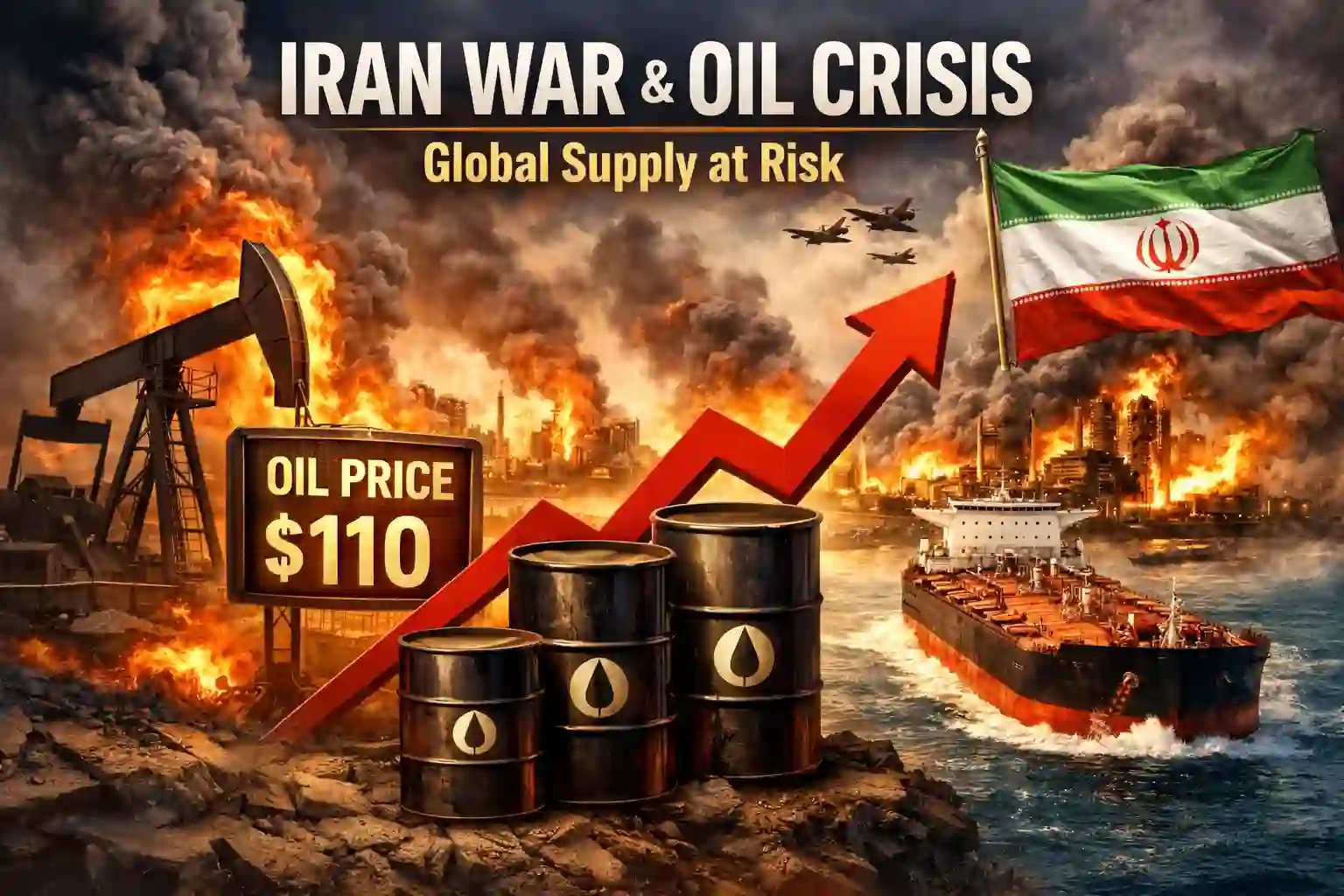
Global crude oil prices have jumped sharply since the conflict intensified. Reports indicate that oil prices crossed $110 per barrel, levels last seen in 2022, due to fears of supply shortages.
Analysts say the biggest concern is disruption in the Strait of Hormuz, a key shipping route through which a significant share of the world’s oil passes daily. Any blockage or attack in this region can quickly affect global energy prices and fuel costs.
Strait of Hormuz Crisis
Energy experts warn that continued instability in the Strait of Hormuz could have “catastrophic consequences” for global oil markets. Nearly 20% of the world’s oil supply travels through this narrow waterway, making it one of the most important energy corridors globally.
If shipping routes remain blocked, several oil-exporting countries in the Gulf may struggle to deliver crude to international markets.
Impact on Global Economy
The Iran war is already affecting economies worldwide. Rising oil prices can lead to:
- Higher fuel prices for consumers
- Increased transportation and logistics costs
- Inflation in food and essential goods
- Slower economic growth in oil-importing countries
Experts warn that if oil prices remain high for a long period, many economies could face significant financial pressure.
Environmental and Infrastructure Damage
The conflict has also damaged key oil infrastructure in the region. Attacks on refineries and oil depots have caused fires and environmental pollution concerns. Experts warn that burning oil facilities release toxic pollutants that can harm air, soil, and water quality.
Impact on India and Other Countries
Countries that rely heavily on imported oil, including India, may face rising fuel prices and potential supply disruptions. Some regions are already concerned about shortages of petroleum products and LPG as global supply chains adjust to the crisis.
Conclusion
The Iran war has become a major factor influencing the global oil market. With supply routes under threat and oil infrastructure targeted, prices remain volatile. If tensions continue, the impact could extend beyond energy markets to affect inflation, transportation, and global economic stability.
Read More News On – www.theshayaries.com